Prelude:
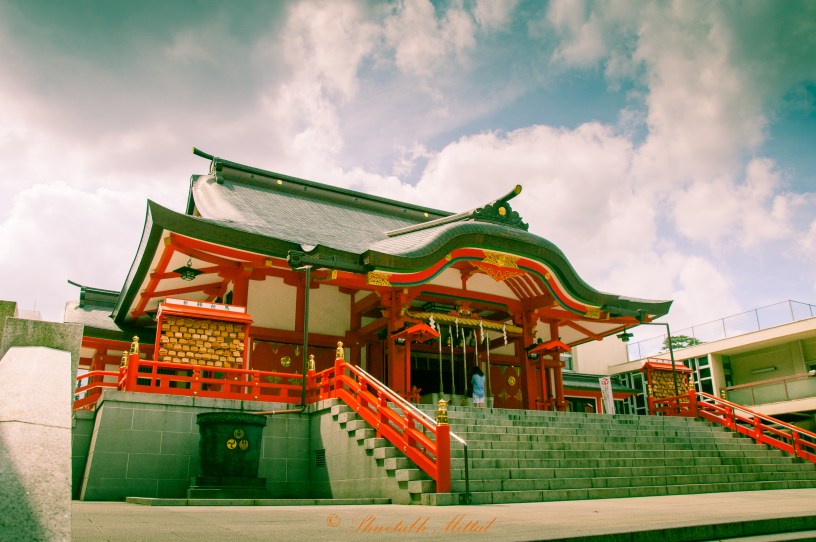
When I was 8 years old, my mom had a month long work trip to Japan. As some of you might know she works for the government and this trip was under the aegis of a joint collaboration between the government of India and Japan. While I was excited about her trip and all the cool stuff she will bring back for us (remember I was 8 years old), there was a cruel deep down understanding that we won’t be able to join her for the trip for a multitude of reasons (school, work trip, blah blah blah). It was then that I started dreaming about traveling one day to Japan and experiencing the land of the rising sun myself. Fast forward two decades and I recently got the opportunity to visit, thanks for my awesome wife’s conference in Japan which ominously overlapped with my work there and we decided to prefix work with a full-on touristy trip.
Planning for the trip:
Japan has a unique culture and has been very inward-focused for a very long time. It has opened up greatly in the past decade, but it still feels very closed and contained within itself. Personally for me, despite the fact that I have been binging on Manga movies and Japanese thrillers for more than a decade, I knew very little about their social norms and nuances. One of my friends at work helped me out by loaning me a great book on the art, culture, history, and food, which helped a great a deal.
Tip 1: Spend some time learning about the culture – Japanese culture is very different than a lot of developed countries that you might have visited or lived in. You would find it very helpful to read a couple of good blog/books that will give you a crash course in understanding the culture and the history of the country. For a quirky 2-4 hours crash course, I would recommend A Geek in Japan which has both a book and a running travel blog. I read it on my flight to Japan and believe me a couple of hours just flew by and I found myself wanting more and very hungry from the description of their food 🙂 (especially the famous Ramen Slurrrrrrp)
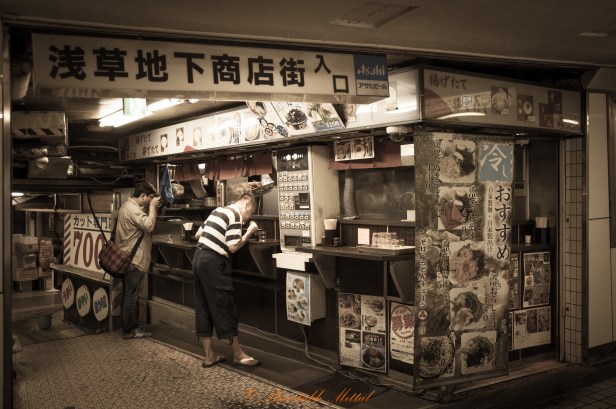
Tip 2: Carry ample cash in Yen from your home country – Being closed also means that their financial system is equally also closed. How might that impact you? Well, you need money to pay for stuff, unless you are a proponent of the barter system. Many Japanese small businesses are still cash based and even if they use a credit card, chances are that a card issued outside Japan may not work. Larger stores in malls and departmental stores are generally OK with credit cards. My advice is that you budget about $50-75 per person per day in cash and carry the yen equivalent from your home country. Another big issue is that your international debit card will not work at a lot of ATMs and you might get somewhat stranded. We landed ourselves in a pickle due to this, but I will get to that later. The two places where I found our international ATM cards to work were the 7-elevens (they are all over the country) and Japan Post Bank. If an ATM does or does not accept an international card, it will say that explicitly. Make sure you choose English language (which surprisingly all the ATMs had, you might have to squint a little bit but it is generally there)
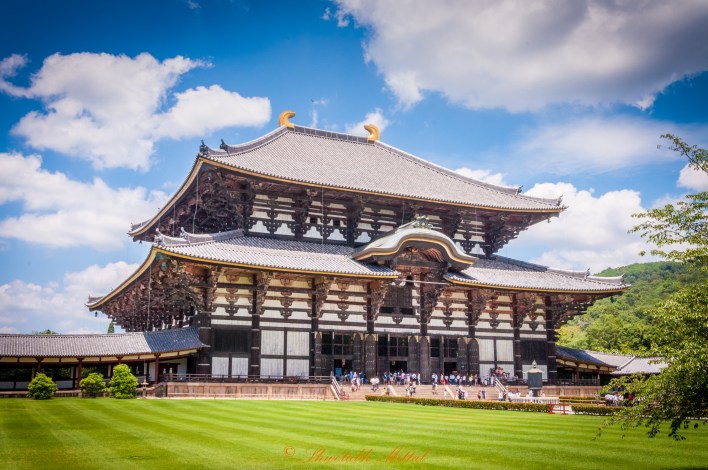
Tip 3: Buy a Japan Rail pass from your base country – If you are a planning a trip that is between 7-15 days, the one thing that will save you a lot of money and trouble is buying a Japan Rail pass. This pass gives you unlimited access to all the awesome Bullet trains around the country (with the exception of 1 or 2 trains). One thing to note is that the pass is not available to buy in Japan. You have to buy in a country outside of Japan and then get it activated in Japan. Trust me, you want to do this. You can buy it from an authorized local travel agent or buy it in online and they will ship it to you. Be sure you leave ample time for it to reach your home before the trip because this is a physical voucher that you will have to present at a JR Pass counter in Japan to get your pass.
Tip 4: Download the Hyperdia App on your smartphone – This is an awesome app that lets you do a search on all the Japanese trains and gets you the trip that will be fully covered by the JR pass (remember to enable the “JR Pass Search” option).
Tip 5: Stay within walking distance of a train station – Large and small Japanese cities are concentrated around train stations. Each of the train station serves as the center of a self-contained mini-city. All businesses, restaurants, shopping districts, office buildings flock around the stations. As you get further away, you start landing into very residential and quiet areas, which personally I don’t enjoy as much. I want to be near the action. And since you will be taking the trains to reach anywhere and everywhere, this will save you a lot of time, walking and, honestly, planning exhaustion.

Tip 6: Plan to stay at least 3-4 nights in a city – The Japan rail system is incredibly efficient and super fast. To give you an idea, with bullets running at speeds of >250kmph, you can reach from Tokyo to Kyoto in 3 hours, Kyoto to Osaka in 16 minutes, Kyoto to Hiroshima in under 2 hours. My strong recommendation would be to identify a base city in a region and undertake day trips from that city. Lugging around your bags and figuring out check-in and check-out times at hotels/Airbnb can prove to be incredibly painful. Plus, many times you will be staring at a steep staircase at a train station without any elevator or escalator and you will have to carry stuff up and down. It’s just a complete downer and I would high encourage you to minimize your base cities. For example, we spent 3 nights in Tokyo and 4 nights in Kyoto. Is there any point in staying the night in Osaka or Hiroshima, when you will likely be easily able to enjoy the city with a day trip? Absolutely not. I know I might come off very strongly on this point, but trust me if you are like us (trying to get the maximum juice for the weakest squeeze) this convenience and accessibility in Japan is an absolute blessing.
Tip 7: Download the offline Google translator – Google has a created an awesome offline translator that will let you translate English text to Japanese in roman characters (this romanized script is called Romaji). It also let you click pictures that have Japanese text in them and you can get an okayish (read partial) English translation. The picture feature works 50% of the time, but that’s much better than 0% of the time and not understanding what’s written in a menu (which, btw, you will land into a lot)
In the next part of this series, I will cover our time spent in Tokyo, the Tsukiji fish market, buying knives in Kappabashi and our day trip to Hakone.
How did you like my post? If you have questions, comments or feedback, please use the following to send your love:


 Wander Lust
japan..through your eyes…seems like you are having great fun,keep posting its awesome read, good job …tony and I ,totally looking at a trip their soon, keep posting in
LikeLike
Thanks, Cindy. Appreciate your feedback.
LikeLike
Very well composed & I am even sharing it few of my friends and colleagues as they are traveling to Japan this month. This tips and guidance are surely very useful.. Keep writing and travelling.
LikeLiked by 1 person
Thanks Kirtana. Let me know if your friends need any additional planning advice for Japan.
LikeLike